Modern construction projects are becoming increasingly complex. Whether you’re developing a commercial building, multi-family residential project, office, healthcare facility, or industrial property, every successful project begins long before construction starts.
One of the most overlooked—but most critical—steps is early Mechanical, Electrical, and Plumbing (MEP) engineering planning.
Many project delays, budget overruns, and construction conflicts can be traced back to one issue: MEP systems were designed too late in the process.
At InnoDez Canada, we believe that involving MEP engineers during the earliest design stages leads to smarter buildings, smoother construction, and significantly lower project costs.
What Is Early MEP Engineering?
Early MEP engineering means designing building systems during the planning and architectural design phase instead of waiting until construction drawings are nearly complete.
Rather than fitting HVAC equipment, electrical rooms, plumbing lines, and mechanical shafts into whatever space remains, engineers collaborate with architects and structural designers from day one.
This integrated approach allows every building system to work together efficiently while maximizing usable space and reducing costly redesigns. Industry trends continue to emphasize early coordination, BIM workflows, and integrated engineering to improve project outcomes.
Why Waiting Too Long Creates Expensive Problems
When MEP engineering is delayed, contractors often discover issues during construction that require redesigns or field modifications.
Common challenges include:
- HVAC ducts conflicting with structural beams
- Electrical conduits occupying plumbing routes
- Insufficient ceiling space for mechanical equipment
- Undersized electrical service
- Mechanical rooms that cannot accommodate required equipment
- Unexpected change orders
- Construction delays
These problems increase costs, extend schedules, and create unnecessary stress for everyone involved.
Benefits of Early MEP Coordination
Reduced Construction Costs
Coordinated engineering minimizes change orders and eliminates expensive on-site modifications.
Instead of solving problems during construction, they’re solved digitally before work begins.
Faster Permit Approval
Complete, coordinated engineering documents help municipalities review projects more efficiently.
Accurate code-compliant drawings reduce revisions and improve permitting timelines.
Better Building Performance
Early planning allows engineers to optimize:
- HVAC efficiency
- Indoor comfort
- Electrical distribution
- Water efficiency
- Equipment accessibility
- Future maintenance
The result is a building that performs better throughout its entire lifecycle.
Improved Collaboration
Successful construction depends on teamwork.
Early collaboration between architects, structural engineers, MEP engineers, contractors, and owners creates a smoother design process with fewer surprises later.
The Role of Building Information Modeling (BIM)
Modern MEP engineering relies heavily on Building Information Modeling (BIM).
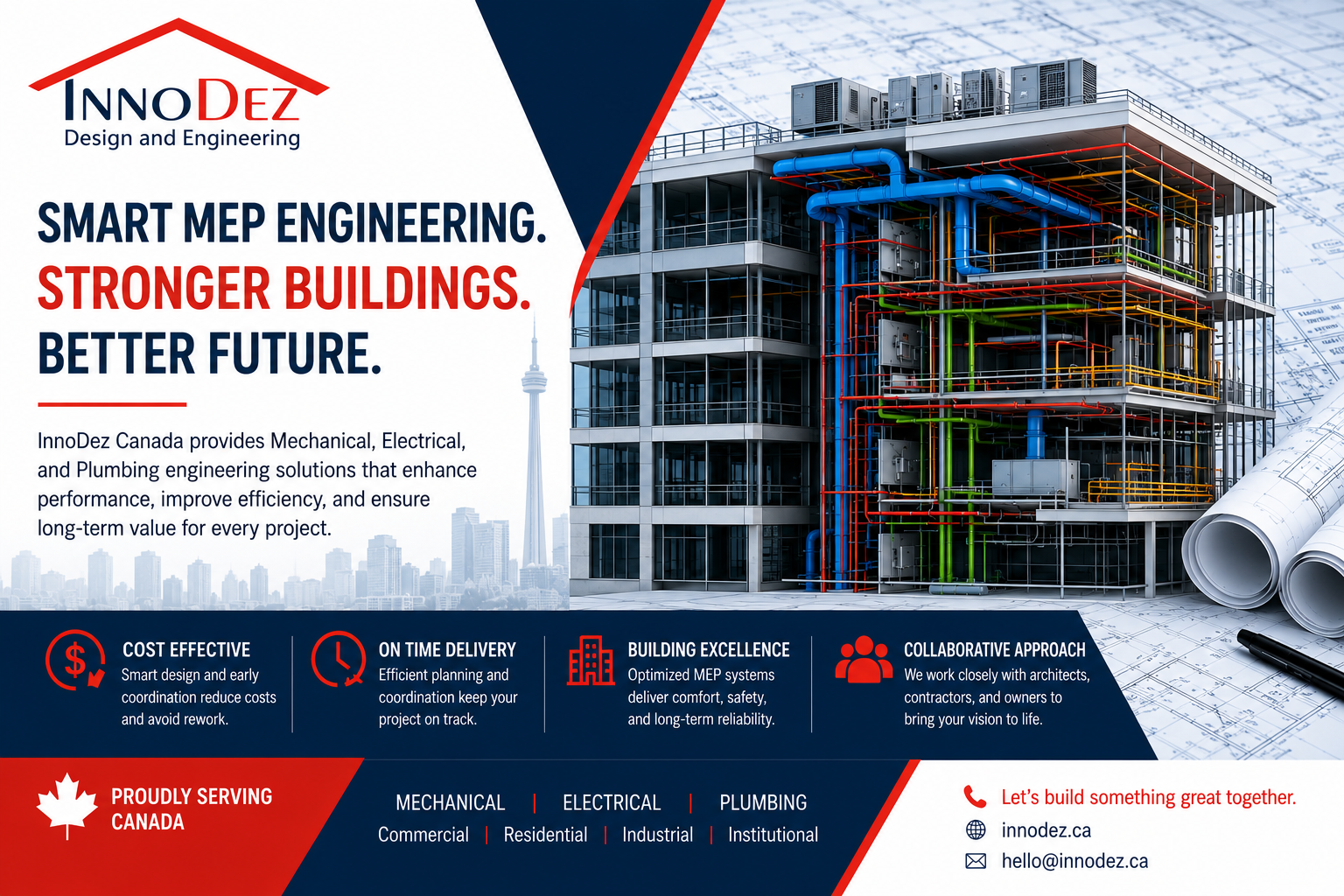
Instead of producing disconnected 2D drawings, engineers develop intelligent 3D models where every mechanical, electrical, plumbing, and structural component is coordinated.
This allows teams to detect clashes before construction begins, improving installation accuracy while reducing project risk. BIM has become a standard approach for coordinating increasingly complex building systems.
Canadian Building Projects Require Careful Coordination
Construction projects across Canada must satisfy provincial building codes, energy efficiency requirements, local utility standards, and municipal regulations.
Early MEP planning ensures these requirements are considered from the beginning rather than becoming obstacles later in the project.
Whether designing projects in Ontario, British Columbia, Alberta, Quebec, or elsewhere in Canada, proper engineering coordination helps avoid costly revisions during permitting and construction.
Projects That Benefit Most from Early MEP Engineering
Almost every project benefits from early engineering involvement, particularly:
- Multi-family residential developments
- Office buildings
- Mixed-use developments
- Restaurants
- Retail centers
- Hotels
- Warehouses
- Healthcare facilities
- Educational buildings
- Industrial facilities
As buildings become more sophisticated, early coordination becomes even more valuable.
How InnoDez Canada Supports Successful Projects
At InnoDez Canada, our engineering team works alongside architects, developers, contractors, and property owners from the earliest stages of every project.
Our multidisciplinary approach enables us to coordinate mechanical, electrical, and plumbing systems that are practical, energy-efficient, and fully compliant with Canadian building requirements.
Using advanced BIM technology and proven engineering workflows, we help clients reduce construction risks, improve efficiency, and keep projects moving forward on schedule.
Final Thoughts
Successful buildings don’t happen by accident—they’re carefully planned from the very beginning.
Investing in early MEP engineering creates fewer construction conflicts, better-performing buildings, lower project costs, and faster project delivery.
Whether you’re planning a residential development, commercial property, or industrial facility, involving experienced MEP engineers early is one of the smartest decisions you can make.
Partner with InnoDez Canada
If you’re planning a construction project anywhere in Canada, InnoDez provides comprehensive Mechanical, Electrical, and Plumbing engineering services designed to simplify the construction process and maximize long-term building performance.
Contact our team today to discuss your project and discover how early MEP planning can save time, reduce costs, and deliver better results.